9 Documents That Keep Appliance Repair Visits Clear and Professional
A repair visit involves more than diagnosing a faulty appliance. These nine practical documents help independent technicians record the condition, approvals, work and customer handoff.
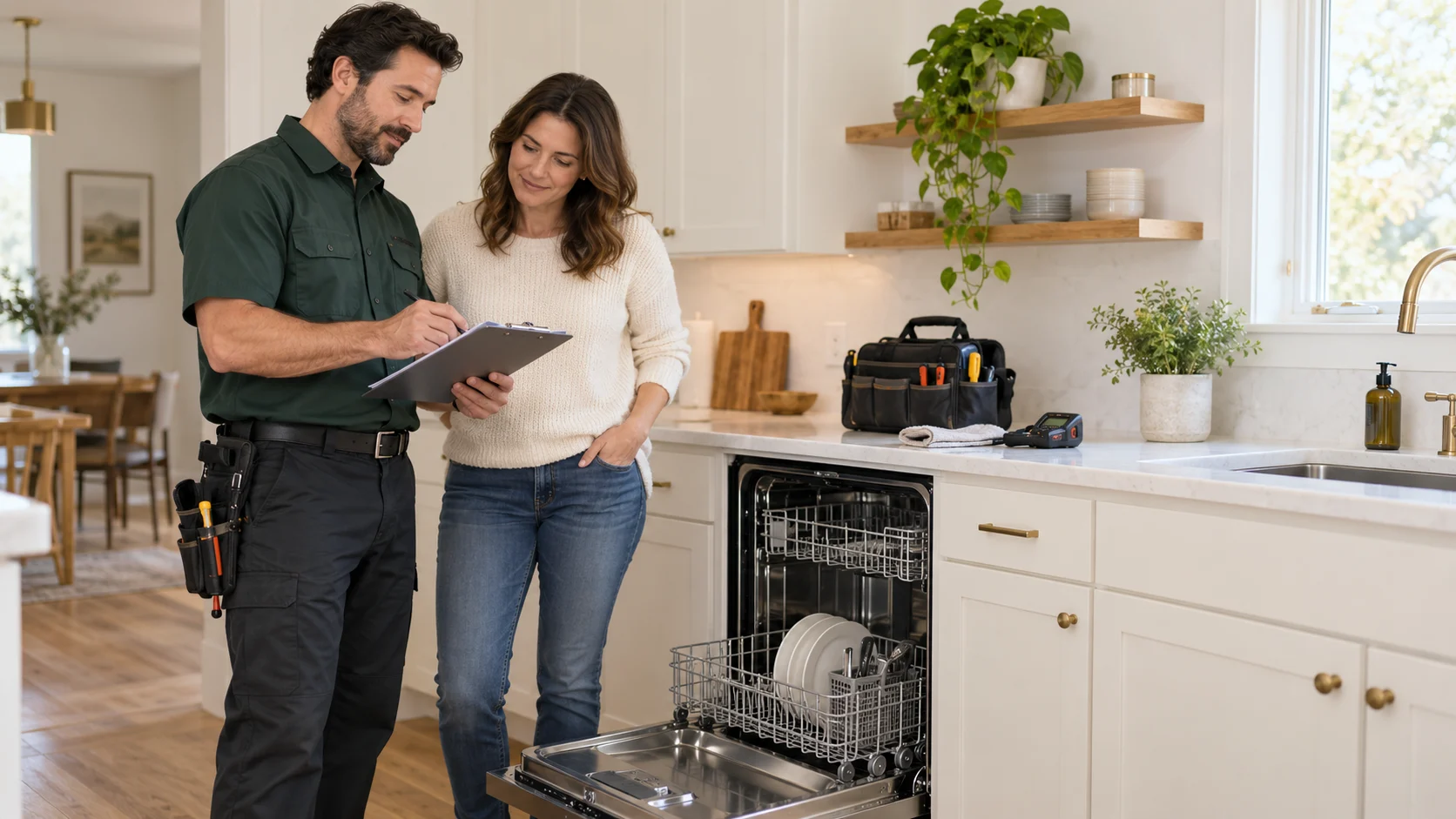
An appliance repair visit begins with a symptom but rarely with the full story. The customer may know that a dishwasher is leaking or a dryer is taking too long, while the technician still needs model details, access, testing and a clear decision about the repair. Several choices may follow in a short period: whether to diagnose, whether to order a part, whether to continue when the cost changes and whether the appliance is ready to return to use.
When those choices are scattered across calls, text messages and memory, even careful technicians can encounter misunderstandings. A connected set of documents gives the visit a visible sequence. It records what the customer reported, what the technician observed, what was authorized, what changed and what was handed back.
The nine documents below are a practical business framework rather than a universal legal checklist. Consumer protection, licensing, electrical and gas work, privacy, warranties and electronic signatures are regulated differently around the world. Each business should tailor its paperwork to its services, qualifications, insurance and local requirements.
1. Appliance and client intake form
The intake form creates a reliable starting point before the technician travels. It can collect the customer and service address, appliance type, brand, model and serial number, approximate age, warranty status and the customer description of the problem. Photos of the rating plate, error code or affected area can help the technician prepare without treating the customer description as a confirmed diagnosis.
Good intake questions also distinguish between a residential appliance, a shared property appliance and commercial equipment. Access instructions, parking limits, building rules and the person authorized to make decisions can affect the visit. The purpose is to arrive informed and avoid spending billable time reconstructing basic details at the door.
2. Appliance repair services agreement
A services agreement explains the general working relationship. It can cover callout or diagnostic fees, payment timing, cancellation, access responsibilities, limitations on the service offered and how additional work will be approved. It should reflect the technician’s actual business instead of copying broad terms from an unrelated trade.
Appliance work may involve electrical supply, water connections, gas connections or moving heavy equipment. The agreement should not imply that a technician will perform regulated work outside their qualifications. Clear scope boundaries help the customer understand what the business can do and when another qualified professional may be required.
3. Diagnostic and repair authorization
Authorization should separate permission to investigate from permission to complete every repair. A customer may approve a diagnostic visit and a spending limit first, then decide what to do after receiving the findings. The document can record the diagnostic charge, testing allowed, limited disassembly and the point at which new approval is required.
That distinction matters when the visible symptom has several possible causes. The technician can investigate without creating an assumption that an unknown repair cost has already been accepted. Time-stamped electronic approval can work well when it preserves exactly what the customer reviewed and approved.
4. Pre-service appliance condition checklist
Before tools are used or the appliance is moved, the technician should record its visible condition and the surrounding work area. The checklist may include dents, cracked trim, damaged flooring, existing leaks, corrosion, loose connections, stored items, limited clearance and any signs that testing would be unsafe. Dated photos can be attached with appropriate permission.
A condition record is not about distrusting the customer. It creates a shared factual baseline. It also supports a professional decision to pause when the appliance, utility connection or work area presents a hazard that must be addressed before service can continue.
5. Diagnostic findings and repair estimate
After testing, the customer needs a plain-language explanation of what was found and what is proposed. A useful estimate connects the reported symptom to the findings, recommended labor, parts, supplies, taxes or fees where applicable and expected timing. Separate confirmed findings from possibilities that require further testing.
The estimate should explain what could change the total. Hidden corrosion, unavailable parts or damage discovered after disassembly may require a revised plan. The technician should pause and document the new approval rather than allowing the original estimate to become an open-ended commitment.
6. Appliance parts and materials approval
Parts decisions carry their own questions. The approval can identify the component, price, availability, expected delivery, warranty source, return or restocking limits and whether the part is original equipment, aftermarket, refurbished or used. If substitutions are possible, state whether the customer must approve them first.
Customer-supplied parts should also be identified. The record can distinguish responsibility for installation work from responsibility for the condition, fit or warranty of a component purchased elsewhere, subject to applicable consumer rules. Written approval is especially useful when a nonreturnable part must be ordered before the next visit.
7. Appliance repair work order
The work order is the technician’s day-of-service record. It can show arrival and departure times, appliance details, tests performed, readings or codes observed, components removed, parts installed and the status of the job. If the technician needs to return, the work order can record what remains open and what the customer should do in the meantime.
Keep the work order aligned with the estimate and parts approval. When the scope changes, record the reason and the customer authorization. A clear job sheet is useful for a solo operator and becomes even more important when another technician may need to understand the history later.
8. Completion and safety notice
The final handoff should say more than “repair complete.” A completion notice can list the work performed, tests completed, parts installed, warranty information, care instructions and any unresolved limitations. It should state whether the appliance was returned to normal use, left disconnected or requires another service provider before operation.
Safety language should be specific and factual rather than dramatic. If the technician advises the customer not to use the appliance, record the reason, the condition in which it was left and the recommended next step. Customer acknowledgment confirms receipt of the information and does not replace the technician’s obligation to follow applicable safety requirements.
9. Incident and damage report
Unexpected events require a calm and consistent record. An incident report can capture the date, location, people present, appliance and property involved, what occurred, immediate steps taken, photographs, notifications and proposed follow-up. It should distinguish direct observations from assumptions.
The form is not an admission template and should not invite speculation. Its purpose is to preserve accurate information while it is fresh and support the business insurer or other qualified adviser if further action is needed. Serious hazards or injuries require the appropriate emergency and reporting procedures for the location.
A simple service visit workflow
Before the visit
Collect intake information and confirm the service address, access and diagnostic fee.
On arrival
Review the service agreement, obtain diagnostic authorization and complete the condition checklist.
After diagnosis
Present the findings, estimate and repair options in writing.
Before ordering or changing work
Record parts choices and obtain approval for any revised scope or cost.
During the work
Maintain the work order as the chronological service record.
At handoff
Provide the completion and safety notice with the final invoice and payment record.
Records that close the financial loop
The invoice and payment receipt complete the document trail. The invoice should correspond with the approved estimate, authorized changes, parts and completed work. It can identify deposits, taxes or fees where applicable, the amount due and accepted payment methods. A receipt and balance acknowledgment then records what was paid, when it was paid and whether any balance remains.
Consistency across the documents matters more than volume. Customer names, appliance identifiers, dates, service descriptions, parts and amounts should agree from intake to receipt. That continuity turns separate forms into a professional service history.
Frequently asked questions
Can one work order contain several of these records?
Yes. A carefully designed work order can combine intake, authorization, findings, estimate and completion fields for a simple visit. The important point is that each decision remains clear and that the customer’s approval can be tied to the version they actually reviewed.
Should technicians photograph the appliance before service?
Photos can support the condition record when they are relevant and the business has permission to collect and store them. Avoid capturing unrelated personal information in the home and follow applicable privacy and retention requirements.
What if the appliance is still under warranty?
Record the warranty information reported by the customer and explain any limits on what the independent technician can confirm. The customer may need to contact the manufacturer or warranty provider before authorizing work that could affect coverage.
Build a clearer appliance repair process
Professional documentation does not replace diagnostic skill. It supports that skill by making the service easier to understand. The customer can see what was reported, what was tested, what was approved and how the appliance was left. The technician gains an organized record instead of relying on scattered messages and memory.
Template Pro-Suite’s Appliance Repair Technicians Starter Kit brings together 11 coordinated documents covering agreements, intake, authorization, condition, findings, estimates, parts, work orders, completion, incidents, invoicing and payment records. Explore the Appliance Repair Technicians Starter Kit and review the included documents before selecting the export options that fit your business.
Editorial note: This article provides general operational information and is not legal, safety, insurance, tax, warranty or regulatory advice. Requirements vary by location, appliance type, service and business circumstances.